
Most Damage, Most Gain in Knee Replacement
Osteoarthritis patients with more knee joint damage may benefit more from total knee replacement
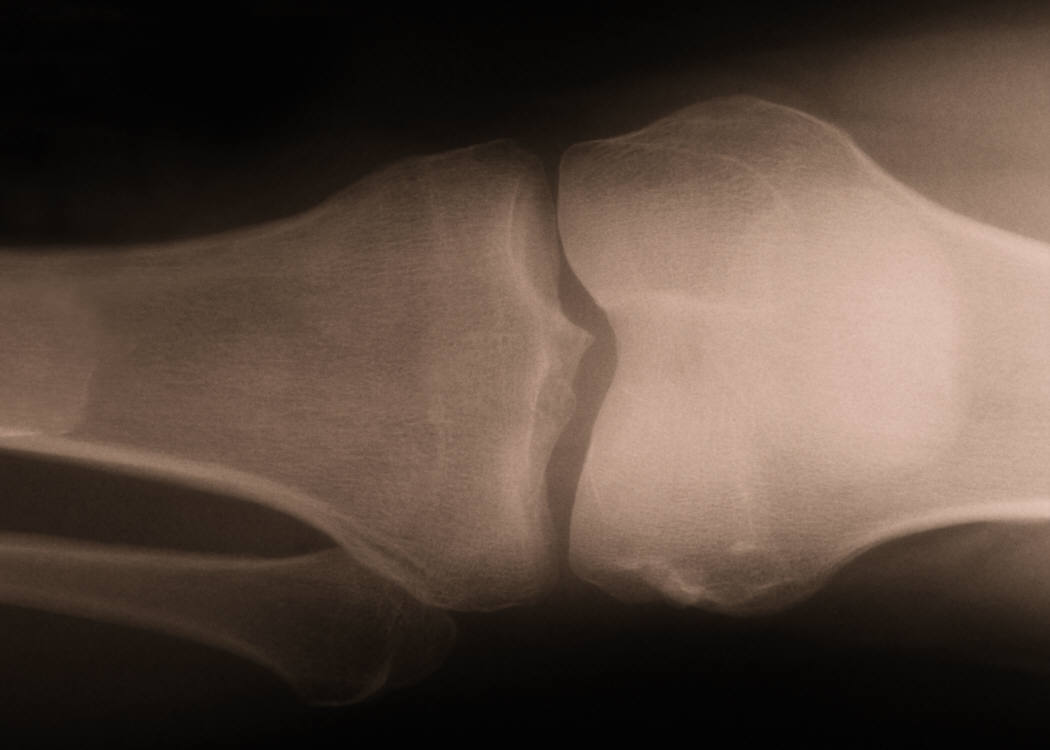
If you have knee osteoarthritis, you can take steps to prevent permanent damage. For those with the damage done, joint replacement surgery may relieve pain and boost knee function.
Osteoarthritis patients with the most joint damage before surgery may be the most likely to benefit from total knee replacement.
In a recent study, patients with the most damage before surgery were least likely to have major pain 1 year after surgery.
Ask your doctor if joint replacement is right for you.
For their study, Michelle Dowsey, PhD, of the University of Melbourne, and colleagues wanted to see how patients with different levels of joint damage responded to total knee replacement surgery.
On average, joint replacement surgery relieved pain and improved function. However, about 30 percent of patients did not get enough pain relief. About 50 percent of patients did not regain enough function.
The researchers looked at X-ray images to measure patients' joint damage. Patients were placed in groups according to their level of damage.
Patients with the least joint damage were up to 5.39 times more likely than those with the most damage to continue feeling moderate-to-severe pain 1 year after surgery.
Compared to patients with the most damage, those with less damage were up to 2.81 times more likely to have poor function 1 year after surgery.
For the most part, higher levels of damage before surgery were associated with greater pain relief and improved function.
For their study, the researchers grouped patients according to the Kellgren-Lawrence Grading Scale - a system for rating joint damage in osteoarthritis, where Grade 1 marks the least damage and Grade 4 marks the most.
A total of 478 osteoarthritis patients were included in the study. Before total knee replacement surgery, patients were grouped by their Kellgren-Lawrence grades.
The study was published August 6 in Osteoarthritis and Cartilage, a journal of Osteoarthritis Research Society International.
All information on this site is provided “as-is” for informational purposes only and is not a substitute for medical advice or treatment. You should consult with a medical professional if you have any questions about your health.
More health news
 Health News
Embrace the Knee Brace
Osteoarthritis pain in the knee cap relieved by wearing flexible lycra knee brace
 Health News
Replacing a Knee May Save Your Heart
Osteoarthritis patients who underwent knee replacement surgery may have lower heart failure and mortality risk
 Features
Twinkle Toes, But Not the Knees
Knee osteoarthritis development can be slowed with exercise program