
When 'Anti' is a Pro Instead of a Con
A look at black raspberries' antioxidant, anti-cancer properties
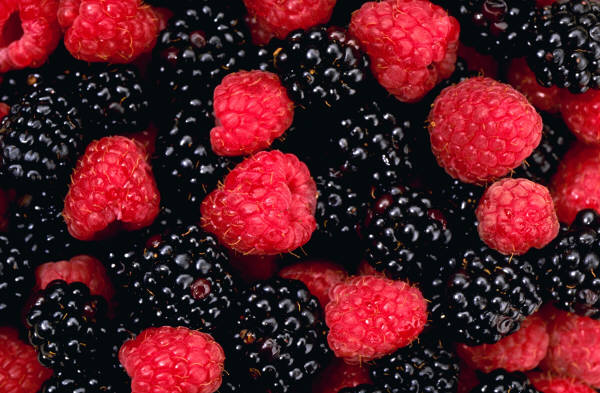
Black raspberries are highly effective in preventing colorectal tumors in two mouse models of the disease, according to a University of Illinois at Chicago study.
The findings are published in the November issue of Cancer Prevention Research.
Colorectal cancer is the third most common cancer and the second leading cause of cancer-related death in both men and women in the U.S., according to the National Cancer Institute.
Building on previous research that found black raspberries have antioxidant, anti-cancer, anti-neurodegenerative and anti-inflammatory properties, the researchers looked at the fruit's ability to prevent colon cancer.
"We saw the black raspberry as a natural product, very powerful, and easy to access," said Dr. Wancai Yang, assistant professor of pathology at the UIC College of Medicine and senior author of the study, whose research focuses on the interactions of genetic and nutritional factors in the development of intestinal cancer and tumor prevention.
The researchers used two strains of mice, Apc1638 and Muc2, which each have a specific gene knocked out, causing the mice to develop either intestinal tumors (in the case of Apc1638) or colitis in the case of Muc2. Colitis is an inflammation of the large intestine that can contribute to the development of colorectal cancer.
Both mouse strains were randomized to be fed either a Western-style, high-risk diet (high in fat and low in calcium and vitamin D) or the same diet supplemented with 10 percent freeze-dried black raspberry powder for 12 weeks.
The researchers found that in both mouse strains the black raspberry-supplemented diet produced a broad range of protective effects in the intestine, colon and rectum and inhibited tumor formation.
In the Apc1638 mice, tumor incidence was reduced by 45 percent and the number of tumors by 60 percent. The researchers found that black raspberries inhibited tumor development by suppressing a protein, known as beta-catenin, which binds to the APC gene.
In the Muc2 mice, tumor incidence and the number of tumors were both reduced by 50 percent, and black raspberries inhibited tumor development by reducing chronic inflammation associated with colitis.
The researchers now hope to obtain funding to begin clinical trials in humans, said Yang. Because black raspberries not only prevent cancer in mice, but also inflammation, they may also protect against other diseases, such as heart disease.
Since blackberries have not been shown to prevent cancer in humans, it is important that patients begin colorectal cancer screening by colonoscopy starting at age fifty. Blackberries may still be beneficial as part of a balanced diet.
All information on this site is provided “as-is” for informational purposes only and is not a substitute for medical advice or treatment. You should consult with a medical professional if you have any questions about your health.
More health news
 Health News
5 Foods That Can Lower Cholesterol
These foods may reduce your blood cholesterol levels and improve your health
 Mental Health
Berries Boost Your Brain!
Memory affected positively by fruit berries
 Health News
Calming the Cancer of Inflammation
Colorectal cancer risks decreased with EGFR in animal study