
Hope on Quadraplegic's Horizon
BioBolt a brain implant to revitalize paralyzed limbs
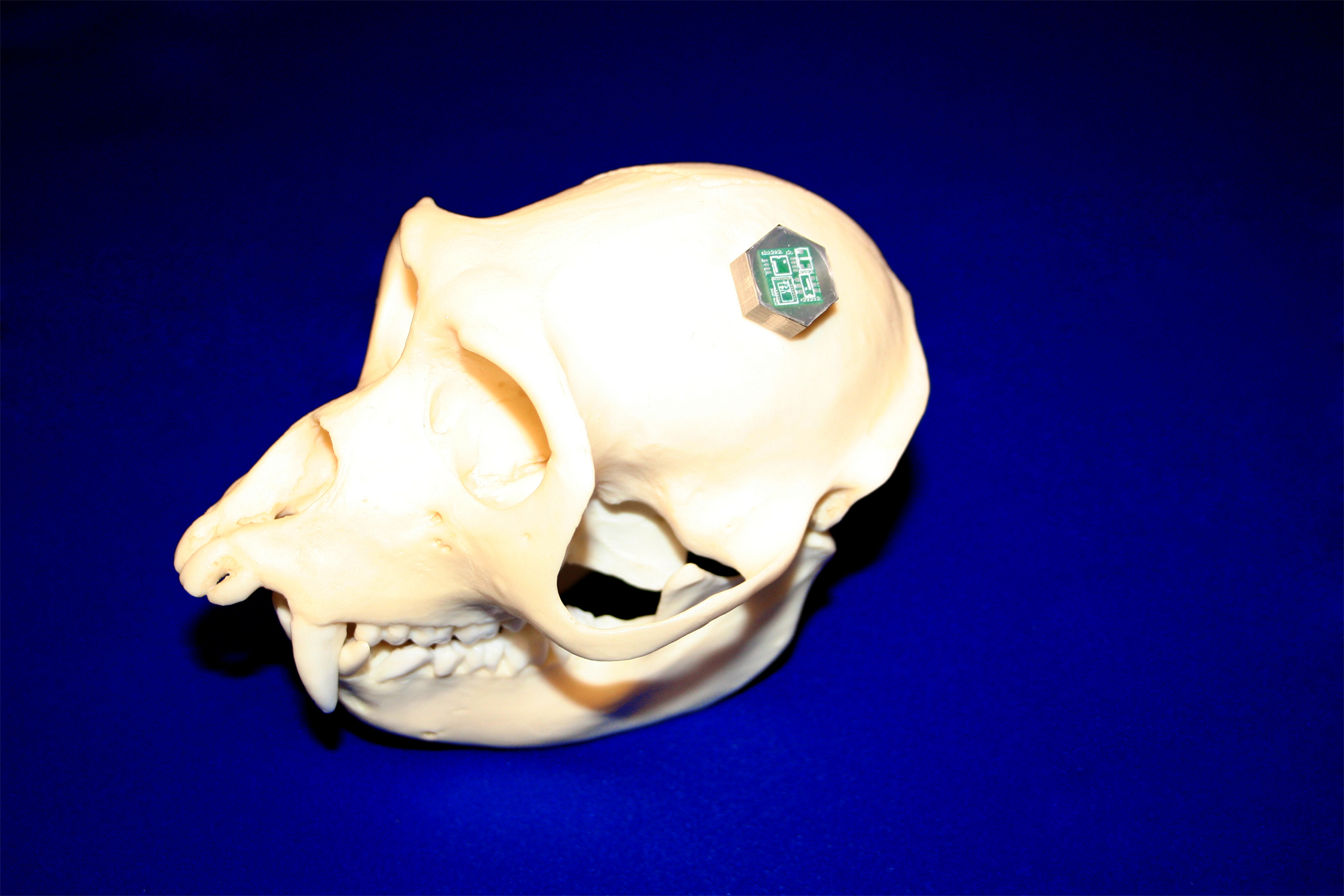
"I think, therefore I am" is a philosophical proof that one's mind exists. Now that it's established one's mind exists, can it be harnessed to provide movement to the paralyzed?
Engineers at the University of Michigan have developed a brain implant which uses a person's skin to transmit neural signals to operate a computer. It is hoped that eventually this technology will use muscles to send neural signals to reboot paralyzed limbs.
The BioBolt is on the cutting edge of paralysis research.
Principal investigator Euisik Yoon, a professor in the University of Michigan College of Engineering, Department of Electrical Engineering and Computer Science reports that this implant is called the BioBolt, which is unlike other neural interface technologies connecting a computer to the brain because it is significantly less invasive and uses low power.
Kendall Wise, the William Gould Dow Distinguished University Professor Emeritus in Engineering aspires to have the device enable paralysis victims' movement by picking up neural signals from the brain and sending those signals to the muscles.
Two other applications are thought to be possible by the researchers: controlling epilepsy and diagnosing diseases like Parkinson's disease. These applications are years away but compelling applications nonetheless.
Yoon explains that the BioBolt would be implanted in the skull beneath the skin and its film of microcircuits would sit on the brain. These microcircuits are like microphones that can listen to the firing neurons and then associate them to a specific brain command.
Those signals are amplified and filtered by the BioBolt and then turned into digital signals which are sent via the skin to a computer.
One hurdle all current brain interfaces must get over is the high level of power required for transmitting data wirelessly from the brain to an outside source. BioBolt keeps the power consumption low by using the skin as the transmitter.
All information on this site is provided “as-is” for informational purposes only and is not a substitute for medical advice or treatment. You should consult with a medical professional if you have any questions about your health.
More health news
 Clinical Trials
Brain Cap Changes Thought into Motion
Prosthetic limbs controlled by thought
 Mental Health
Commanding R2D2 - With Your Mind
Stroke victims could use brain computer interface to control robotic assistive devices
 Health News
Baby Got Limbs Back
Nerve guidance conduits help regrow nerve cells and restore limb functionality